The Invisible Enterprise: Mapping the Shadow Operations That Really Run Your Business
The boardroom presentation is flawless. Colorful process maps flow across the screen, showing how work moves through the organization with mathematical precision. Every step is documented, every handoff is transparent, and every decision point is mapped. The executives nod approvingly at this picture of operational excellence.
But in the cubicles three floors down, Sarah from accounts payable is crafting her daily workaround to a procurement system that technically should handle everything she needs but somehow never does. Down the hall, Marcus has developed a personal relationship with someone in legal who can fast-track contract reviews in ways that would horrify the compliance team if they knew. And in the customer service center, the entire afternoon shift has collectively abandoned the official troubleshooting script in favor of an approach that actually resolves issues on the first call.
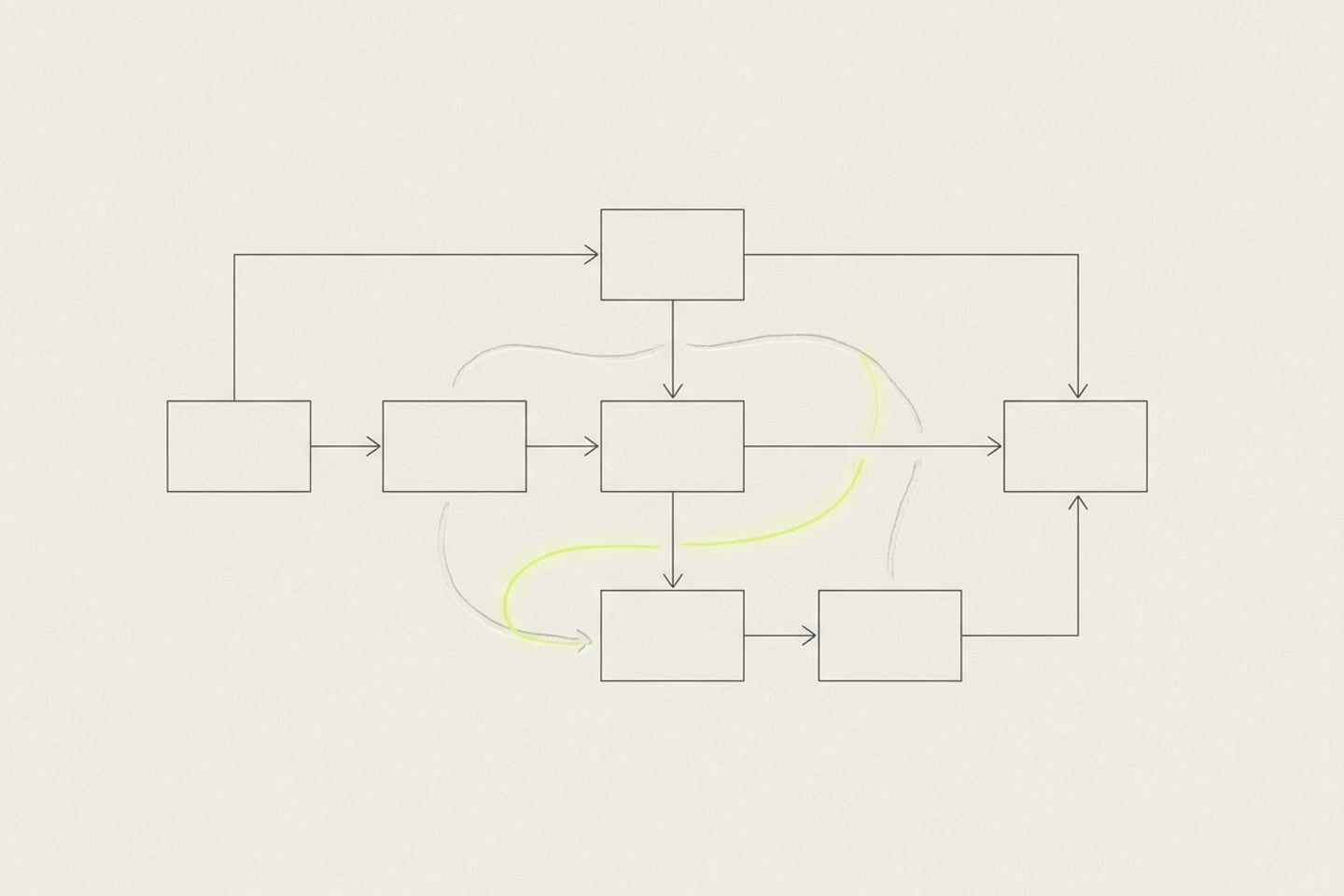
Welcome to the invisible enterprise – the shadow organization that exists in the gaps between official processes, thriving in the spaces where documented procedures meet messy reality.
The Parallel Universe of Actual Work
Every organization operates two distinct systems simultaneously. There’s the enterprise that lives in documentation, org charts, and training manuals – clean, logical, and optimized for predictability. Then there’s the enterprise that actually gets things done – adaptive, relationship-driven, and optimized for results.
The gap between these two worlds isn’t a bug in your organizational design. It’s a feature that emerges naturally when intelligent people encounter processes that can’t anticipate every scenario they’ll face. The invisible enterprise represents the collective intelligence of your workforce, solving problems that your systems designers never imagined.
The Innovation Underground
I recently read about a manufacturing supervisor whose team had reduced the number of quality defects by 40% over the past year. When asked how, he explained a simple observation system they’d developed – nothing fancy, just a way of noticing patterns that the official quality control process missed. The improvement had never been formally documented, never appeared in any report, and had never been shared with other shifts. It existed purely in the invisible enterprise.
This pattern repeats across organizations everywhere. Sales teams develop qualification methods that outperform the CRM-mandated process. HR departments create informal networks that place candidates more effectively than the official recruitment system. Finance teams build relationships that accelerate approvals in ways that no workflow diagram could capture.
The invisible enterprise isn’t just about workarounds – it’s about innovation that happens too organically to be captured by formal innovation processes.
The Architecture of Invisible Operations
Understanding the invisible enterprise requires recognizing its distinct characteristics. Unlike official processes that prioritize consistency and compliance, shadow operations optimize for effectiveness and adaptability.
Relationship-Centric Design
Official processes assume that systems and procedures drive outcomes. The invisible enterprise recognizes that relationships drive systems. When Sarah needs that procurement exception processed quickly, she doesn’t escalate through official channels – she calls Jenny, who knows someone in the approval workflow who can flag urgent items.
These relationship networks often prove more reliable than formal escalation procedures because they’re built on mutual trust and shared outcomes. They adapt in real-time to changing circumstances and personnel, creating resilience that rigid process maps can’t match.
Exception-First Architecture
Formal processes are designed around 80% of situations that follow predictable patterns. The invisible enterprise specializes in the 20% that don’t – the edge cases, emergencies, and unique circumstances that expose the limitations of standardized approaches.
Over time, these exception-handling capabilities become sophisticated systems in their own right. Customer service teams develop diagnostic methods for problems that aren’t in the knowledge base. Project managers create coordination mechanisms for cross-functional work that organizational charts often overlook. Procurement specialists build vendor networks that can respond to requirements that formal contracts don’t cover.
Continuous Evolution
Perhaps most importantly, the invisible enterprise never stops adapting. While official processes require change management initiatives and formal approval to evolve, shadow operations improve continuously based on real-world feedback. They’re beta testing solutions every day that formal systems might take months to implement.
The Double-Edged Reality
The invisible enterprise creates both tremendous value and significant risk. Organizations that learn to see and leverage their shadow operations gain competitive advantages that competitors with better documented processes can’t match. However, organizations that remain blind to these systems face vulnerabilities that formal risk management often overlooks.
The Innovation Advantage
Companies with visible and invisible enterprises – organizations that are aware of and actively learn from their shadow operations – consistently outperform those that don’t. They capture innovations that emerge organically from the field. They adapt more quickly to changing conditions because their shadow systems are already experimenting with potential solutions. They retain institutional knowledge that exists nowhere in their documentation but everywhere in their actual operations.
The Knowledge Time Bomb
However, invisible enterprises also create knowledge vulnerabilities that traditional succession planning often overlooks. When Marcus leaves, his legal relationship network disappears with him. When the afternoon customer service shift changes, their superior troubleshooting approach evaporates. When the manufacturing supervisor retires, the 40% quality improvement will disappear because it was never systematically captured.
Organizations lose millions in capability when key people leave, not because of what’s documented in their job descriptions, but because of what they’ve built in the invisible enterprise.
The Technology Paradox
Interestingly, technology often amplifies rather than eliminates shadow operations. Each new system implementation creates new gaps that require human ingenuity to bridge. Cloud platforms that don’t integrate properly spawn elaborate workarounds involving shared spreadsheets. Automation systems that handle 95% of cases gracefully create complex exception-handling processes for the 5% they miss.
Modern organizations typically operate dozens of software systems that were never designed to work together seamlessly. The invisible enterprise becomes the integration layer – the human middleware that makes incompatible systems function as if they were designed holistically.
The Integration Specialists
In most organizations, some people’ve become inadvertent systems integration specialists. They know which databases have the most current information, which APIs actually work reliably, and which manual processes fill critical gaps in automated workflows. These individuals often possess a more comprehensive understanding of organizational operations than those who designed the official systems.
Their knowledge represents both opportunity and risk. Organizations that capture and systematize their integration expertise can build more resilient operations. Organizations that ignore it remain dependent on individuals who may not even realize the critical importance of their knowledge.
Making the Invisible Visible
The question isn’t whether your organization should have an invisible enterprise – it already does. The question is whether you can see it clearly enough to learn from it, protect against its vulnerabilities, and leverage its innovations.
The Archaeology of Actual Work
Understanding your invisible enterprise requires approaching it like an archaeological dig. You have to carefully excavate the layers of workarounds, relationships, and informal processes that have accumulated over time. This means asking different questions than traditional process analysis.
Instead of “What’s the official procedure?” ask “What do people actually do when they need to get this done quickly?” Instead of “Who’s responsible for this?” ask “Who do people call when this goes wrong?” Instead of “How should this work?” ask “How does this work when it works well?”
The Workaround Audit
Every workaround tells a story about a gap between system design and user needs. But not all workarounds are created equal. Some represent dangerous shortcuts that create compliance risks. Others represent innovations that should be scaled across the organization.
Smart organizations conduct regular workaround audits – systematic examinations of the unofficial processes that have emerged to bridge system gaps. They distinguish between productive shadows that add value and problematic shadows that create risk. Then they work to systematize the valuable innovations while addressing the underlying problems that created risky workarounds.
The Future of Work Visibility
We’re entering an era where the traditional separation between official and invisible enterprise may become obsolete. New technologies are enabling the observation of work at levels of granularity that were previously impossible. Computer vision can watch how people actually use software interfaces. Machine learning can identify patterns in decision-making that humans might miss. Process mining can reconstruct actual workflows from digital footprints.
But technology alone won’t solve the invisible enterprise puzzle. The real breakthrough comes from combining technological observation with human insight – using data to illuminate the sophisticated problem-solving that happens in the shadows, then working with people to scale the innovations while preserving the adaptability that makes them valuable.
The Observable Organization
The organizations of the future will be simultaneously more structured and more adaptive than today’s enterprises. They’ll have comprehensive visibility into how work actually happens, but they’ll use that visibility to enhance rather than constrain human ingenuity. They’ll be aware of their shadow operations in real-time and actively cultivate them as sources of competitive advantage.
These observable organizations won’t eliminate the gap between official and actual processes – they’ll make that gap visible and manageable. They’ll turn the invisible enterprise into a visible, strategic capability rather than a hidden vulnerability.
The invisible enterprise has always been there, running parallel to your official operations, solving problems you didn’t know existed, and creating value you can’t measure. The question is whether you’re ready to see it clearly enough to harness its full potential.
Because in an age where competitive advantage increasingly comes from adaptation speed and innovation velocity, the organizations that can see and leverage their invisible operations will leave behind those that remain blind to the shadow systems that actually run their business.
The future belongs to those who can make the invisible visible – and then make it systematically brilliant.