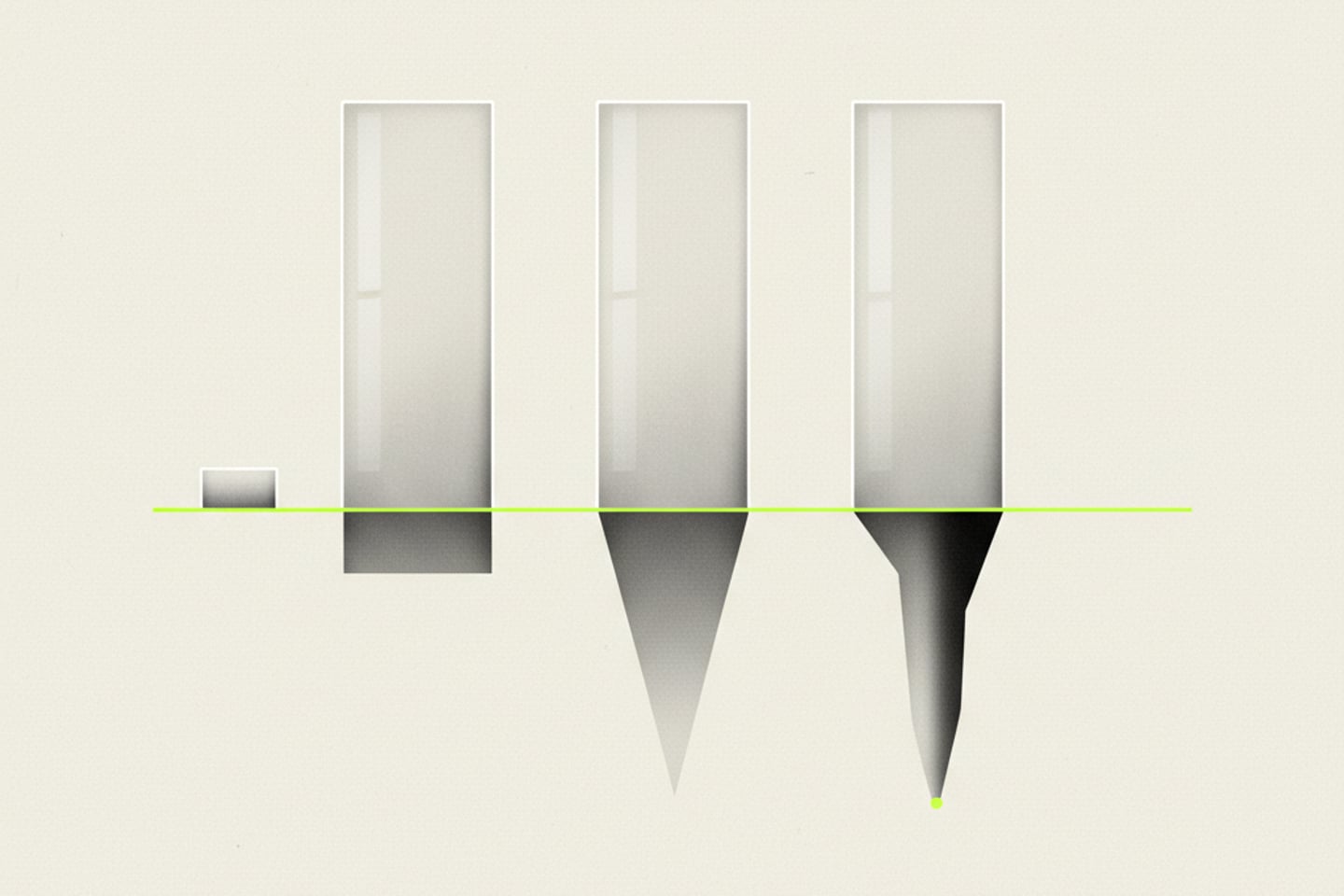
Those of us who work in enterprise AI for a living are having a hard time keeping up with the frontier models. It isn’t only the cadence out of OpenAI, Anthropic, and Google. It’s the Chinese frontier labs cutting their own path. The open‑weight tier is closing the gap from below. Specialized models that quietly outperform the giants on narrow tasks. New evaluations that reshuffle the leaderboard every few weeks.
And then the announcements about restrictions on Fable and Mythos. Even those whose full-time job it is to chart these developments are scattering pillar to post.
This week, one model tops the benchmarks. Next week, another.
For an enterprise trying to build a durable advantage, that’s confusing. And none of it moves enterprise mountains on its own. The senior leaders I work with have mostly already arrived at this, often through painful experience. The model is not the moat.
The harder question, the one no leaderboard answers, is what is.
What gets commoditized
Most CIOs at Global 2000 scale have lived through this pattern more than once. Relational databases were once a moat, then a commodity. Cloud infrastructure was once a moat, then a utility. ERP modules were strategic differentiators; now they’re table stakes. Each time, the layer that felt central became substrate, and the durable advantage moved to whatever sat on top and grew more useful over time.
Foundation models are the next layer doing this. A capability that costs tens of millions of dollars to train this year is matched by an open‑weight equivalent within months. Capabilities that felt like miracles in 2023 are line items on procurement forms.
If your differentiation rests on access to the best model, your moat has the half‑life of the next release cycle. Worse, your customers can see it. They read the same benchmarks you do. The real question isn’t which model to bet on. It’s what you build on top of the model that compounds, while the model itself does not.
Switching costs vs. moats
Before getting to where moats actually live, separate two things that get conflated on strategy slides: switching costs and moats. They look similar on a balance sheet (both produce retention), but they behave very differently when a real alternative arrives.
| Switching cost | Moat | |
|---|---|---|
| What it does | Traps customers in place | Pulls customers toward you |
| Customer feeling | Stuck | Choosing again on a clean slate |
| When alternatives arrive | Customer churns the moment friction drops | Customer stays because the value is real |
| Trajectory | Erodes as tooling improves | Compounds as you accumulate more |
Switching costs trap customers. If a viable replacement appeared tomorrow, they’d leave. Retention is a function of pain, not preference. Plenty of enterprise software lives in this category, and most of us could name a few systems in our own portfolios that fit.
Moats, by contrast, attract. The customer would choose you again on a clean slate, because you’re genuinely more valuable than the alternatives, and that value is growing.
That’s not a position I’d want to defend before a board in 2026. What follows is about moats — the kind that pull rather than trap.
The three gravities
The enterprise software companies that have held their position across multiple technology cycles (not just the last one) tend to share three compounding forces. I think of them as gravities, because each one gets stronger as more mass accumulates around it, and because they pull customers in rather than locking them in.
Most durable enterprise positions have at least two of these. The strongest have all three, arranged so that each one feeds the others.
1 · Data gravity
Not data in the abstract: every enterprise has data, most of it inert. Data gravity is the kind of proprietary, longitudinal, contextual observation that a competitor can’t reconstruct with money and time. It’s earned by being in the right place for long enough.
Schlumberger is a useful example, because most enterprise architects outside the energy sector have never thought about it. Over decades, the company accumulated subsurface measurement data across most of the world’s producing basins. A new entrant with a better algorithm can build a beautiful model. They can’t retroactively put sensors in those wellbores in 1987. The data is the position, and the position keeps producing.
What makes data gravity a moat rather than just a hoard is that it improves the quality of every decision made on top of it. Models are catalysts for this kind of data. They are not substitutes for it.
2 · Workflow gravity
Workflow gravity is the depth at which a system is woven into how work actually gets done. Not how it is documented to get done, but how it actually gets done, in the version that survives the gap between the process diagram and the desktop.
Most enterprises do not actually know how their own work gets done. They have process documentation (which describes the version of the work that survives committee review), and they have the work itself, which is something else. The gap between the two is where the real expertise lives.
The high performers in any function have quietly developed signal paths (the deviations from documented process that produce better outcomes), and these signal paths are made of latent intelligence that exists nowhere on paper. A system that can see this, one that observes the actual work rather than the documented work, is positioned to do something no model can do on its own.
This is also where many enterprises misjudge their own AI investments. A chatbot bolted onto the side of a workflow has no gravity. A system that observes, learns from, and reshapes the workflow itself — that has gravity, and it accumulates.
3 · Trust gravity
Trust gravity is the rarest and most underrated of the three. It is the accumulated record of having been right (or accountably wrong) in situations where the answer mattered.
Bloomberg is the canonical case. The terminal is expensive. The interface is famously unloved by anyone under forty. Faster, cheaper, prettier alternatives have been launched many times. None of them has displaced it, because when a portfolio manager makes a decision based on a Bloomberg quote and the trade goes wrong, no one gets fired for the data source. That is trust gravity, and it took decades to build.
Trust gravity matters more in the AI era, not less. Foundation models are probabilistic by nature. They will be wrong sometimes. The question for any enterprise deploying them is whether the surrounding system has earned the right to be trusted when it acts.
Why they compound
Each of the three is valuable on its own. Together, they form a loop that tightens over time, and that loop is the actual moat.
Workflow gravity generates proprietary data because the system is observing real work as it happens. That data improves the quality of decisions and predictions, which deepens trust. Deeper trust earns the system permission to take on more of the workflow, generating more data that compounds further.
Models do not accumulate. Each new release starts from roughly the same place as the last, but with better weights. The gravities accumulate. That is the whole difference.
It’s also why I’d push back on the framing that an enterprise should pick its model and build around it. The right framing: pick the layer where time works in your favor, and treat the model as a swappable component within it.
Five questions to ask
If the three gravities map onto something real in your business, the test is whether they hold up against specific questions. Here are five worth taking into the next architecture or vendor review:
If you run these questions across a handful of your most strategic platforms and a few of your AI initiatives, the picture usually clarifies fast. Some investments are building gravity. Others are building model dependencies dressed up as strategy. The first kind compound. The second kind has to be defended, again, every time the next model release lands.
Where to actually build
I’m not arguing that models don’t matter. They matter enormously, and the gap between a well‑chosen, well‑tuned model and a poorly chosen one is real. But the model is the engine, and engines get swapped. The chassis is what you keep.
For most Global 2000 enterprises, the chassis is some combination of proprietary observation of how the business actually runs, deep embedding in the workflows that make the business work, and a track record that earns the right to act on the business’s behalf. That’s where time compounds in your favor. That’s where a competitor with a better model still has to climb a wall they didn’t see coming.
The companies that come out of this cycle stronger won’t be the ones that picked the right model. They’ll be the ones who used the model era to build gravity: quietly, in the layers that compound, in the parts of the architecture no slide deck puts at the centerpiece.
The model is not the moat. It never was. It’s just the part of the picture that’s easiest to draw.